ARTIFICIAL INTELLIGENCE (AI) TOOL USE VERSUS EXPERT-LED INSTRUCTION IN PRECLINICAL MEDICAL EDUCATION: A CROSSSECTIONAL SURVEY OF STUDENT EXPERIENCE, PERCEPTIONS, AND ACADEMIC PERFORMANCE
DOI:
https://doi.org/10.55374/jseamed.v10.304Keywords:
artificial intelligence, preclinical medical education, medical students, academic performance, expert-led instructionAbstract
Background: Artificial Intelligence (AI) is increasingly integrated into preclinical medical education. Despite rapid adoption, comparative data on student satisfaction, perceptions, learning preferences, and academic outcomes remain limited. This study aimed to evaluate these outcomes among preclinical medical students.
Methods: A cross-sectional study was conducted among preclinical medical students at Phramongkutklao College of Medicine, Bangkok, Thailand (June 2024–May 2025). A validated questionnaire was administered. Academic performance was measured by cumulative grade point average (GPAX) and stratified by AI usage intensity: more-AI-using (>5 h/week) and less-AI-using (≤5 h/week). Statistical analyses included the Wilcoxon signed-rank test and an independent t-test (p < 0.05).
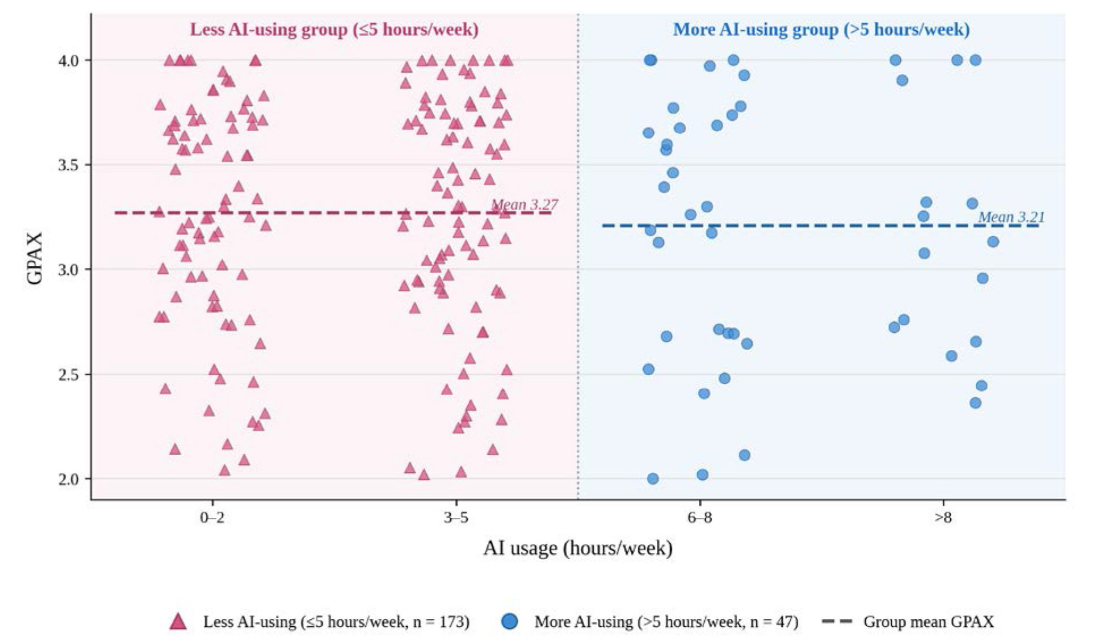
Results: A total of 220 students completed the questionnaire (Year 2: 44.1%; male: 55.9%; mean age: 19.4 ± 1.6 years). 90.9% had previously used AI tools in preclinical studies, most commonly for 3–5 hours per week. Expert-led instruction was rated significantly higher than AI for effectiveness, preclinical confidence, clinical readiness, and overall satisfaction. 90.5% preferred expert-led instruction as the primary modality; however, 87.7% endorsed an integrated AI–expert framework (concurrent or AI after expert). Despite 93.6% of students reporting that AI positively impacted their learning outcomes and 82.7% reporting improved problem-solving skills, GPAX did not differ significantly between the more AI-using (>5 hours/week, 3.21 ± 0.64) and less AI-using (≤5 hours/week, 3.27 ± 0.56) groups (p = 0.100).
Conclusion: Preclinical medical students used AI tools extensively but rated expert-led instruction higher in terms of overall satisfaction. No significant association was found between self-reported AI-use intensity and academic performance. Students favored a blended model that positions AI as a complement to expert-led instruction. These findings support incorporating AI literacy and ethics into preclinical curricula while preserving the strengths of expert-led instruction.
Downloads
Metrics
References
Bratko I. Machine Learning. In: Gilhooly KJ, editor. Human and Machine Problem Solving. Boston, MA: Springer US; 1989. p. 265-87. DOI: https://doi.org/10.1007/978-1-4684-8015-3_10
Civaner MM, Uncu Y, Bulut F, Chalil EG, Tatli A. Artificial intelligence in medical education: a cross-sectional needs assessment. BMC Med Educ 2022; 22: 772. DOI: https://doi.org/10.1186/s12909-022-03852-3
Narayanan S, Ramakrishnan R, Durairaj E, Das A. Artificial Intelligence Revolutionizing the Field of Medical Education. Cureus 2023; 15: e49604. DOI: https://doi.org/10.7759/cureus.49604
Davenport T, Kalakota R. The potential for artificial intelligence in healthcare. Future Healthc J 2019; 6: 94-8. DOI: https://doi.org/10.7861/futurehosp.6-2-94
Jackson P, Ponath Sukumaran G, Babu C, Tony MC, Jack DS, Reshma VR, et al. Artificial Intelligence in medical education - perception among medical students. BMC Med Educ 2024; 24: 804. DOI: https://doi.org/10.1186/s12909-024-05760-0
Rezaei-Zadeh M, Cerbin-Koczorowska M. A research roadmap for AI opportunities in student assessment for medical education. BMC Med Educ 2025; 25: 1653. DOI: https://doi.org/10.1186/s12909-025-08078-7
Fahim YA, Hasani IW, Kabba S, Ragab WM. Artificial intelligence in healthcare and medicine: clinical applications, therapeutic advances, and future perspectives. Eur J Med Res 2025; 30: 848. DOI: https://doi.org/10.1186/s40001-025-03196-w
Shaw K, Henning MA, Webster CS. Artificial Intelligence in Medical Education: a Scoping Review of the Evidence for Efficacy and Future Directions. Med Sci Educ 2025; 35: 1803-16. DOI: https://doi.org/10.1007/s40670-025-02373-0
Preiksaitis C, Rose C. Opportunities, challenges, and future directions of generative artificial intelligence in medical education: Scoping Review JMIR Med Educ 2023; 9: e48785. DOI: https://doi.org/10.2196/48785
Albusmait A, AlSaleh A, Ahmed J. Medical students’ perceptions and attitude toward the use of artificial intelligence in healthcare. Adv Med Educ Pract 2026; 17: 1-9. DOI: https://doi.org/10.2147/AMEP.S541284
Shi X, Jiang Z, Xiong L, Siu K-C, Chen Z. Utilization of AI among medical students and development of AI education platforms in medical institutions: cross-sectional study. JMIR Hum Factors 2026; 13: e81652. DOI: https://doi.org/10.2196/81652
Kaewpradit K, Ngamchaliew P, Buathong N. Digital screen time usage, prevalence of excessive digital screen time, and its association with mental health, sleep quality, and academic performance among Southern University students. Front Psychiatry 2025; 16: 1535631. DOI: https://doi.org/10.3389/fpsyt.2025.1535631
Lukram H, Baishya R, Chakma S. Screen time patterns and their impact on academic performance: A prospective study among phase 1 MBBS Students. Cureus 2026; 18: e101440. DOI: https://doi.org/10.7759/cureus.101440
Aminololama-Shakeri S, López JE. The doctor-patient relationship with artificial intelligence. Am J Roentgenol 2018; 212: 308-10. DOI: https://doi.org/10.2214/AJR.18.20509
Atwa H, Shehata MH, Al-Ansari A, Kumar A, Jaradat A, Ahmed J, et al. Online, face-toface, or blended learning? faculty and medical students’ perceptions during the COVID-19 pandemic: A mixed-method study. Front Med (Lausanne) 2022; 9: 791352. DOI: https://doi.org/10.3389/fmed.2022.791352
Sharma A, Sharma H, Choudhary U. E-Learning versus traditional teaching in medical education: A comparative study. JK Science 2020; 22: 137-40.
Kenzaka T, Goda K, Kumabe A. A comparison of the learning effects of face-to-face versus online formats of a clinical reasoning lecture. Cureus 2022; 14: e26109. DOI: https://doi.org/10.7759/cureus.26109
Brunsbach S, Kattenbach R, Weber I. Keep on Learning - Academic exhaustion and teaching evaluation in digital times. Zeitschrift für Politikwissenschaft 2021; 32. DOI: https://doi.org/10.1007/s41358-021-00294-z
Ang KCS, Afzal F, Crawford LH. Transitioning from passive to active learning: Preparing future project leaders. Proj Leadersh Soc 2021; 2: 100016. DOI: https://doi.org/10.1016/j.plas.2021.100016
Tong DH, Uyen BP, Ngan LK. The effectiveness of blended learning on students’ academic achievement, self-study skills and learning attitudes: A quasi-experiment study in teaching the conventions for coordinates in the plane. Heliyon 2022; 8: e12657. DOI: https://doi.org/10.1016/j.heliyon.2022.e12657
Blackwood L, Hollo Z, Amaratunge L. Electronic learning methods compared to traditional learning methods in anaesthesia education: a systematic review. BMC Med Educ 2025; 25: 1465. DOI: https://doi.org/10.1186/s12909-025-07502-2
Nartthanarung A, Plangsiri K, Kongmalai P. Comparative impact of ChatGPT and conventional search tools on clinical reasoning performance: A randomized crossover study in preclinical medical students. Adv Med Educ Pract 2026; 17: 615304. DOI: https://doi.org/10.2147/AMEP.S603679
Çiçek FE, Ülker M, Özer M, Kıyak YS. ChatGPT versus expert feedback on clinical reasoning questions and their effect on learning: a randomized controlled trial. Postgrad Med J 2025; 101: 458-63. DOI: https://doi.org/10.1093/postmj/qgae170
Tavakol M, Dennick R. Making sense of Cronbach’s alpha. Int J Med Educ 2011; 2: 53-5. DOI: https://doi.org/10.5116/ijme.4dfb.8dfd
Ranganathan P, Caduff C. Designing and validating a research questionnaire - Part 1. Perspect Clin Res 2023; 14: 152-5. DOI: https://doi.org/10.4103/picr.picr_140_23
Boateng GO, Neilands TB, Frongillo EA, Melgar-Quiñonez HR, Young SL. Best practices for developing and validating scales for health, social, and behavioral research: A Primer. Front Public Health 2018; 6: 149. DOI: https://doi.org/10.3389/fpubh.2018.00149
Pinto Dos Santos D, Giese D, Brodehl S, Chon SH, Staab W, Kleinert R, et al. Medical students’ attitude towards artificial intelligence: a multicentre survey. Eur Radiol 2019; 29: 1640-6. DOI: https://doi.org/10.1007/s00330-018-5601-1
Sami A, Tanveer F, Sajwani K, Kiran N, Javed MA, Ozsahin DU, et al. Medical students’ attitudes toward AI in education: perception, effectiveness, and its credibility. BMC Med Educ 2025; 25: 82. DOI: https://doi.org/10.1186/s12909-025-06704-y
Nazaretsky T, Gabbay H, Käser T. Can students judge like experts? A large-scale study on the pedagogical quality of AI and human personalized formative feedback. Comput Educ : Artif Intell 2026; 10: 100533. DOI: https://doi.org/10.1016/j.caeai.2025.100533
Wisniewski B, Zierer K, Hattie J. The power of feedback revisited: A meta-analysis of educational feedback research. Front Psychol 2019; 10: 3087. DOI: https://doi.org/10.3389/fpsyg.2019.03087
Komasawa N, Yokohira M. Generative Artificial Intelligence (AI) in medical education: A narrative review of the challenges and possibilities for future professionalism. Cureus 2025; 17: e86316. DOI: https://doi.org/10.7759/cureus.86316
Ayers JW, Poliak A, Dredze M, Leas EC, Zhu Z, Kelley JB, et al. Comparing physician and artificial intelligence chatbot responses to patient questions posted to a public social media forum. JAMA Intern Med 2023; 183: 589-96. DOI: https://doi.org/10.1001/jamainternmed.2023.1838
Topol EJ. High-performance medicine: the convergence of human and artificial intelligence. Nat Med 2019; 25: 44-56. DOI: https://doi.org/10.1038/s41591-018-0300-7
Seneviratne T, Kodikara K, Abeykoon I, Palpola W. Perception of medical undergraduates on artificial intelligence in medical education: qualitative exploration. JMIR Med Educ 2025; 11: e73798. DOI: https://doi.org/10.2196/73798
Chan KS, Zary N. Applications and Challenges of Implementing Artificial Intelligence in Medical Education: Integrative Review. JMIR Med Educ 2019; 5: e13930. DOI: https://doi.org/10.2196/13930
Zarei M, Eftekhari Mamaghani H, Abbasi A, Hosseini M-S. Application of artificial intelligence in medical education: A review of benefits, challenges, and solutions. Med Clín Prác 2024; 7: 100422. DOI: https://doi.org/10.1016/j.mcpsp.2023.100422
Khong ML, Tanner JA. Surface and deep learning: a blended learning approach in preclinical years of medical school. BMC Med Educ 2024; 24: 1029. DOI: https://doi.org/10.1186/s12909-024-05963-5
Char DS, Shah NH, Magnus D. Implementing machine learning in health care - addressing ethical challenges. N Engl J Med 2018; 378: 981-3. DOI: https://doi.org/10.1056/NEJMp1714229
Abdulnour RE, Gin B, Boscardin CK. Educational strategies for clinical supervision of artificial intelligence use. N Engl J Med 2025; 393: 786-97. DOI: https://doi.org/10.1056/NEJMra2503232
Downloads
Published
How to Cite
Issue
Section
License
Copyright (c) 2026 Journal of Southeast Asian Medical Research

This work is licensed under a Creative Commons Attribution-NonCommercial-NoDerivatives 4.0 International License.
The Journal of Southeast Asian Medical Research will hold the copyright to all published articles. The publisher's production department handles copyright forms once a manuscript is accepted and scheduled for publication.